
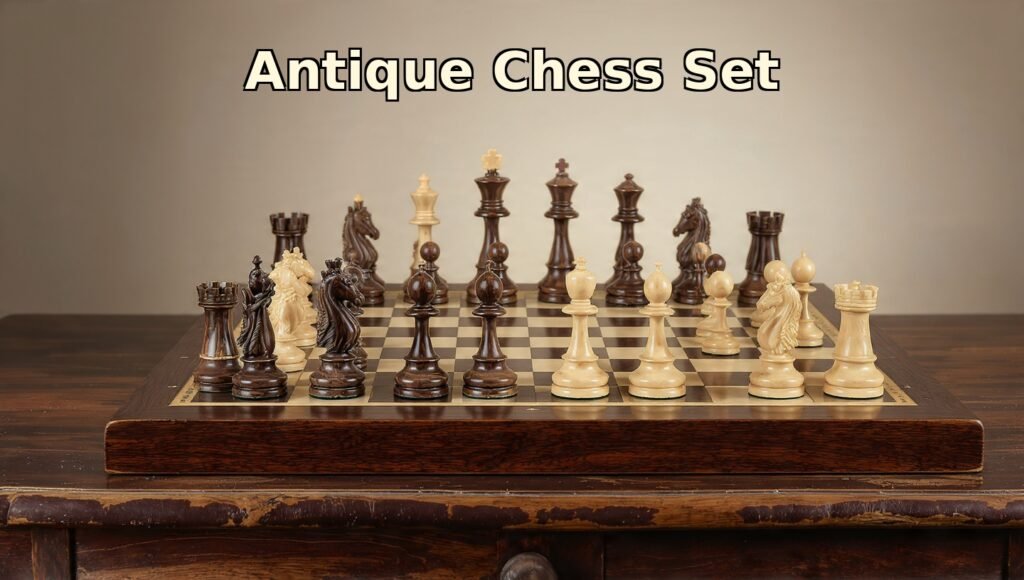
Every antique chess set carries two stories inside it. The first is the story of chess itself — one of humanity’s oldest and most enduring intellectual pursuits, played across centuries and civilizations in forms that have shifted and evolved while the essential spirit of the game remained unchanged. The second story belongs to the set itself — the craftsperson who shaped each piece, the hands that played with it across generations, the culture and era that defined its design, and the remarkable journey that brought it to wherever it sits today.
That combination of historical depth, artistic craftsmanship, and human connection is precisely what makes an antique chess set so much more than a game. For collectors, historians, chess enthusiasts, and anyone with a genuine appreciation for beautifully made objects, an antique chess set occupies a category of its own — simultaneously functional, decorative, and deeply meaningful.
This guide explores everything worth knowing about antique chess sets, from understanding their history and identifying genuine pieces to evaluating value, caring for a collection, and knowing what to look for when searching for the perfect set.
The History Woven Into Every Antique Chess Set
Chess Across Civilizations
To truly appreciate an antique chess set, understanding the broader sweep of chess history provides essential context. Chess originated in India during the sixth century, where it was known as Chaturanga — a Sanskrit word referring to the four branches of the ancient Indian military. From India the game traveled westward through Persia, where it evolved into Shatranj, before spreading across the Islamic world and eventually reaching Europe through the trading routes and cultural exchanges of the medieval period.
Each civilization that adopted chess left its own mark on the physical form of the pieces. Early Islamic chess sets featured abstract, non-figurative designs — elegant geometric shapes that conveyed the function of each piece without depicting human or animal figures, in accordance with religious artistic traditions. European chess sets of the medieval period moved in the opposite direction, producing increasingly elaborate figurative pieces that depicted kings, queens, bishops, knights, and foot soldiers in styles that reflected the feudal social structures of the time.
By the time the eighteenth and nineteenth centuries arrived, chess had become a genuinely global game with a rich tradition of regional design variation. Antique chess sets from this era reflect the extraordinary diversity of that tradition — from the bold ivory carving traditions of India and China to the refined woodworking of European craftspeople and the intricate metalwork of Middle Eastern artisans.
The Staunton Revolution
No single moment in the history of chess set design carries more significance for antique chess set collectors than the introduction of the Staunton pattern in 1849. Designed by Nathaniel Cook and endorsed by the era’s leading chess authority Howard Staunton, the Staunton chess piece design established a standardized visual language for the game that remains universally recognized to this day.
Antique Staunton chess sets from the Victorian era — particularly those produced by the original manufacturer Jaques of London — are among the most sought-after pieces in the entire antique chess set collecting world. These early Staunton sets were crafted from boxwood and ebony, weighted with lead, and finished to a standard of precision and elegance that competing manufacturers spent decades trying to match. An authentic Jaques Staunton chess set from the nineteenth century represents not merely a beautiful antique chess set but a historically significant object that helped define the visual identity of modern chess.
Identifying a Genuine Antique Chess Set
Age as the Foundation of Authenticity
The word antique carries a specific meaning in the collecting world — generally referring to objects that are at least one hundred years old. A genuine antique chess set therefore dates to before the mid-twentieth century at the latest, and the most historically valuable sets predate the twentieth century entirely. Understanding what genuine age looks and feels like in a chess set is the first essential skill any collector needs to develop.
Authentic antique chess pieces carry the marks of age in ways that are difficult to fake convincingly. The weight and density of older materials — genuine ivory, aged hardwoods, early Bakelite, hand-poured metals — feel distinctly different from modern reproductions. The patina that develops on wood and ivory surfaces over decades of handling and exposure to light creates color gradations and surface character that artificial aging techniques cannot fully replicate.
Materials That Define an Era
The materials used in an antique chess set provide one of the most reliable indicators of its age and origin. Genuine ivory chess pieces — now subject to strict legal restrictions on sale and trade in many countries — were the prestige material of the eighteenth and nineteenth centuries. Ivory antique chess sets from this period exhibit a warm, creamy color that deepens over time into rich amber tones, with fine natural grain lines visible across the surface of each piece.
Bone chess pieces were a more affordable option from the same period, commonly found in antique sets made for the middle class instead of wealthy collectors . Bone pieces often show a slightly more porous surface texture than ivory and tend toward whiter tones that yellow differently over time. Distinguishing genuine antique bone pieces from later plastic imitations requires careful examination of surface texture, density, and the particular way the material responds to natural light.
Hardwoods including boxwood, ebony, rosewood, and fruitwoods were used extensively in European antique chess sets across multiple centuries. The aging process in antique wooden chess sets produces a depth of color and grain character that fresh-cut wood simply does not possess, making experienced handling of old wooden pieces one of the most reliable ways to develop an instinct for authenticity.
Maker’s Marks and Provenance
The most valuable antique chess sets typically carry some form of maker’s identification — a stamp, label, or signature applied by the original craftsperson or manufacturer. Jaques of London pieces from the Victorian era, for example, often carry the company’s name stamped on the base of the King piece. German and French manufacturers of the eighteenth and nineteenth centuries similarly marked their finest sets in ways that allow attribution and dating by knowledgeable collectors.
Provenance — the documented history of an antique chess set’s ownership and origin — adds considerable value beyond the physical object itself. A set with documented history connecting it to a notable previous owner, a significant historical event, or a prominent chess player of the past carries both monetary and cultural value that transcends the quality of the craftsmanship alone.
Regional Styles of Antique Chess Sets
European Antique Chess Sets
European antique chess sets encompass an extraordinarily wide range of regional styles developed across centuries of chess tradition. English sets from the eighteenth and nineteenth centuries tend toward clean, refined designs with clearly differentiated piece profiles and high-quality material finishing. German antique chess sets frequently feature bolder, more architectural piece designs with a characteristic solidity to the carving. French antique chess sets from the nineteenth century often display a particular elegance of proportion and surface finishing that reflects the country’s broader tradition of decorative arts excellence.
Asian Antique Chess Sets
Antique chess sets originating from India and China represent some of the most visually spectacular pieces available to collectors. Indian antique chess sets — particularly those produced in the Vizagapatam style — feature extraordinarily fine ivory or bone carving that depicts detailed figurative scenes across the surface of each piece. These sets were frequently produced for export to European buyers during the colonial period and combine Indian artistic traditions with design elements introduced by European taste.
Chinese export antique chess sets from the eighteenth and nineteenth centuries are similarly prized for their intricate carving and their fascinating cultural fusion. Chinese craftspeople often depicted the two opposing sides of a chess set as Chinese imperial forces facing European colonial figures — creating chess sets that function simultaneously as games, art objects, and historical documents of a particular cultural moment.
Islamic and Middle Eastern Antique Chess Sets
The abstract geometric designs of Islamic antique chess sets from the medieval period represent the earliest surviving tradition of non-figurative chess piece design. These pieces — typically carved from ivory, bone, or stone in simple but beautifully proportioned abstract forms — carry a historical significance that places them among the most important antique chess objects in existence. While genuine medieval Islamic chess pieces are rare and appear almost exclusively in museum collections, later examples continuing this abstract tradition from the Ottoman and Persian cultural spheres do appear occasionally in specialist auctions and antique dealers.
Understanding Antique Chess Set Value
What Drives Value in the Collector’s Market
Several interconnected factors determine the value of an antique chess set in the collector’s market, and understanding how these factors interact helps both buyers and sellers approach the market with realistic expectations.
Age is the foundational value factor — older sets command higher prices than newer ones, all else being equal. But age alone does not determine value. The completeness of the set matters enormously — an antique chess set with all thirty-two original pieces present is worth dramatically more than the same set missing even a single piece, because replacement pieces from the correct period and origin are often impossible to source. Condition affects value significantly — pieces with cracks, chips, repairs, or significant discoloration are worth considerably less than examples in well-preserved original condition.
Material rarity adds another dimension. Genuine ivory antique chess sets — where legal to sell under applicable local laws — command premium prices because the material itself can no longer be legally sourced. Antique chess sets made from unusual or regionally specific materials that appear infrequently in the market attract collector interest that drives prices beyond what condition and age alone would suggest.
Professional Appraisal
Anyone considering buying or selling a significant antique chess set should seek professional appraisal from a qualified antiques specialist with specific knowledge of chess set history and valuation. General antiques appraisers may not have the specialist knowledge needed to distinguish a genuinely valuable antique chess set from a high-quality later reproduction — a distinction that can translate to thousands of dollars of difference in assessed value.
Specialist auction houses that handle antique games and chess collectibles regularly include Christie’s, Sotheby’s, and several specialist chess antique dealers who operate both at auction and through private sale. These experts bring both market knowledge and scholarly expertise to the appraisal process and provide documented valuations that are essential for insurance, estate planning, and sale purposes.
Caring for an Antique Chess Set
Protecting Materials That Cannot Be Replaced
An antique chess set is not merely valuable — it is irreplaceable. The materials, craftsmanship, and historical context that combine to create a genuine antique cannot be recreated in the present, which means the responsibility of preservation rests entirely with whoever currently holds the set.
Ivory and bone antique chess pieces require careful management of their environmental conditions. Both materials are sensitive to changes in humidity and temperature — too dry an environment causes cracking, while excessive moisture introduces warping and the risk of mold. A stable indoor environment away from direct sunlight, heating vents, and exterior walls provides the most reliable protection. Pieces should be handled with clean, dry hands to prevent the transfer of oils and moisture onto the surface.
Antique wooden chess pieces benefit from periodic light conditioning with a natural, non-silicone wood product that nourishes without creating a heavy surface film. Storage in a lined box or case away from light prevents the uneven color change that occurs when part of a set is regularly exposed to light while other pieces remain in storage.
Cleaning Without Causing Harm
Cleaning an antique chess set requires patience and restraint. The temptation to restore pieces to a bright, polished appearance should be firmly resisted — the patina that develops on antique surfaces over decades is part of what makes them authentic and valuable, and aggressive cleaning removes it permanently.
A soft, dry brush removes surface dust without introducing moisture or abrasion. For more stubborn surface marks on wooden pieces, a barely damp cloth applied with minimal pressure and followed immediately by thorough drying is the safest approach. Chemical cleaners, polishes, and solvents should never be applied to antique chess pieces without specialist guidance, as these products can irreversibly damage both the material and the surface finish.
Starting or Growing an Antique Chess Set Collection
Finding Genuine Pieces
The antique chess set market rewards patient, knowledgeable buyers who take time to develop their expertise before committing to significant purchases. Specialist chess antique dealers, dedicated auction houses, antique fairs, and estate sales all provide genuine opportunities to acquire quality pieces — but each channel requires a different approach and level of due diligence.
Building relationships with reputable specialist dealers provides access to their knowledge and expertise alongside their inventory. A trusted dealer can alert a collector to incoming pieces that match their specific interests, provide honest condition assessments, and help navigate the complexities of provenance verification and authentication.
Starting Modestly and Learning Constantly
No collector starts with a complete, perfectly curated antique chess set collection. The most knowledgeable and successful collectors in this field typically began with modest, affordable pieces and built their expertise gradually through handling, research, and the occasional expensive mistake. Each piece handled teaches something — about materials, about period styles, about what genuine age looks and feels like compared to skilled reproduction.
Specialist books on chess set history and antique chess collecting, combined with regular visits to museum collections that include historic chess sets, provide an educational foundation that transforms a casual interest into genuine connoisseurship. The Victoria and Albert Museum in London, the Metropolitan Museum of Art in New York, and the World Chess Hall of Fame in St. Louis all hold significant historic chess set collections that reward close study.
An Antique Chess Set Is a Piece of Living History
What ultimately separates an antique chess set from every other chess set is the weight of history it carries. When someone sets up an antique chess set and begins to play, they are participating in a tradition that stretches back across centuries and continents — connecting their game to every other game played on that same board, with those same pieces, by people whose names may be lost to history but whose touch remains somehow present in the worn edges and burnished surfaces of each piece.
That connection to something larger and older than any individual game is what makes antique chess sets genuinely irreplaceable. They are not simply beautiful objects or valuable investments, though they are both of those things. They are living artifacts of human history — proof that across all the centuries of change and conflict and cultural transformation, people have always found time to sit across from one another, set up the pieces, and play.
Pingback: Large Chess Pieces: Number 1 Guide to Transform Your Chess Experience Introduction: Discovering the World of Large Chess Pieces - Chess Next Move - Best next move calculator