
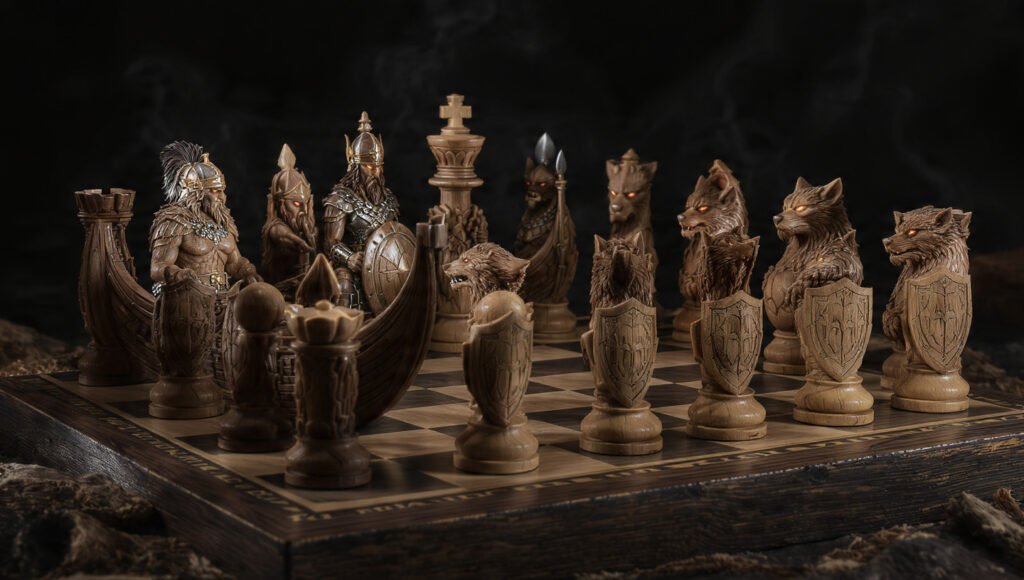
The Viking chess set represents one of the most fascinating intersections of history, art, and strategic gameplay. These remarkable pieces have captivated collectors, historians, and chess enthusiasts for centuries, offering a window into the sophisticated culture of Norse civilization. it merely a collection of game pieces—it’s a tangible connection to a civilization known for its craftsmanship, exploration, and intellectual pursuits.
Today’s chess enthusiasts rediscover the appeal of historically-inspired sets, and stands at the forefront of this renaissance. Whether displayed as decorative art or used for actual gameplay, these sets carry an authenticity and character that modern mass-produced pieces simply cannot replicate. The story of the encompasses legend, archaeology, and the enduring human love of strategic games.
The Lewis Chessmen: Origin of the Viking Chess Set Legend
Discovery and Historical Significance
The most famous Viking chess set in existence is undoubtedly the Lewis Chessmen, discovered in 1831 on the Isle of Lewis in the Outer Hebrides of Scotland. This archaeological discovery revolutionized our understanding of Viking-era craftsmanship and cultural sophistication. The Lewis Chessmen consist of approximately ninety pieces carved from walrus ivory, dating back to the twelfth century.
The discovery of these remarkable pieces challenged prevailing assumptions about Viking society. Instead of viewing Vikings solely as raiders, the Lewis Chessmen demonstrated that Norse culture encompassed artisans, merchants, and individuals who appreciated refined leisure activities. This remains one of the most significant archaeological finds related to medieval gaming.
Craftsmanship and Artistic Excellence
Examining the original Lewis Chessmen reveals extraordinary artistic skill. Each piece of this historic displays individual character and personality. The carving techniques employed show sophisticated understanding of proportion, symmetry, and expressive sculpture.
The rooks in this Viking chess set are particularly distinctive, depicted as berserkers—legendary Norse warriors—literally gnawing their shields in characteristic poses of fury and anticipation. The queens sit regally, displaying crowns and scepters. Knights ride upon elaborately detailed horses. These artistic choices weren’t merely decorative; they served to clearly distinguish different piece types during gameplay.
Understanding Viking Chess Set Design and Pieces
The Six Standard Piece Types
A traditional Viking chess set, like the historical Lewis pieces, consists of six distinct piece types: kings, queens, bishops, knights, rooks, and pawns. Every piece in an authentic Viking chess set carries a meaning rooted in Norse culture and medieval society. In a Viking chess set, the king typically wears a crown and holds a sword, representing authority and warfare. The queen sits prominently, adorned with jewelry and regalia. Bishops display religious vestments, acknowledging the Church’s significant role in medieval Scandinavian society. Knights ride horses, representing nobility and military prowess. Rooks appear as castles or berserkers, emphasizing defensive and offensive capabilities. Pawns represent common soldiers or citizens.
Materials Used in Viking Chess Sets
Historical Viking chess sets were carved primarily from walrus ivory, a material prized throughout the Norse world. This material’s availability through Arctic trade routes made it a natural choice for high-status gaming pieces. The ivory’s warm coloring, durability, and carving properties made it ideal for creating the intricate Viking chess set designs we admire today.
Modern Viking chess set reproductions employ various materials. Quality reproductions use materials like resin, stone, or bone to capture the aesthetic of historical pieces. Some artisans hand-carve wooden Viking chess sets, maintaining traditional techniques while adapting to modern material preferences and ethical considerations regarding ivory usage.
The Cultural Significance of Viking Chess Sets
Gaming in Norse Society
Chess wasn’t merely entertainment in Viking and medieval Norse society—it was an intellectual pursuit worthy of respect. Historical accounts suggest that strategic games held significant cultural importance. The existence of ornate, expensive Viking chess sets indicates that chess was played by nobility and the wealthy merchant class.
The Viking chess set served as a status symbol, much like fine art or jewelry. Possessing an elaborate Viking chess set demonstrated wealth, cultural sophistication, and access to valuable materials and skilled craftsmen. Playing chess itself marked one as educated and intellectually engaged.
Trading and Cultural Exchange
The chess set’s presence in Norse territory tells a fascinating story about medieval trade networks. Chess originated in India, spreading through Persia and the Islamic world before reaching Europe. The discovery of the Hebrides demonstrates how extensively Norse traders participated in international commerce and cultural exchange.
Vikings weren’t isolated raiders; they were merchants, explorers, and cultural intermediaries who encountered new games, ideas, and artistic traditions throughout their trading voyages. The exemplifies how cultural artifacts traveled along medieval trade routes, transforming and adapting to local artistic traditions.
Characteristics of Authentic Viking Chess Set Replicas
Recognizing Quality Reproductions
Modern craftspeople create Viking chess set replicas that capture the spirit of historical pieces while addressing contemporary material concerns. An authentic Viking chess set replica demonstrates several key characteristics: individual carved details, slightly asymmetrical but intentional design, warm earth tones or natural colors, and substantial weight indicating quality materials.
Legitimate Viking chess set reproductions respect historical accuracy while allowing for practical modern adaptations. The best replicas showcase the artistic individuality visible in the original Lewis pieces, where no two pieces are perfectly identical.
Distinguishing Features of Viking Design
A genuine Viking chess set design incorporates Norse aesthetic elements: geometric patterns, interlocking designs, and symbolic imagery representing Viking culture. The pieces should display personality—faces with expression, postures suggesting character and role, and decorative elements that reflect medieval Scandinavian artistic traditions.
Poor quality Viking chess set imitations appear overly uniform, lack detail, and display plastic or obviously artificial finishes. Authentic reproductions demonstrate the handcrafted quality and artistic attention that characterized historical pieces.
Modern Popularity and Collecting
The Renaissance of Viking Chess Sets
Contemporary interest in Viking chess sets has surged, driven by popular culture, historical interest, and appreciation for handcrafted gaming pieces. Television series, fantasy literature, and historical documentaries have sparked renewed fascination with Viking civilization and its artistic achievements.
Collectors actively seek high-quality , viewing them as investments in historical art as much as functional gaming pieces. Museums worldwide feature displays of chess sets throughout history, with the Lewis Chessmen remaining among the most visited and photographed collections.
Functional vs. Display Pieces
Some purchasers of intend them for active gameplay, requiring pieces of appropriate weight and size for comfortable play. Others acquire Viking chess sets primarily for display, appreciating them as sculptural art and historical references. Quality makers accommodate both purposes, creating pieces suitable for either function.
Display-focused often feature more elaborate carving and decorative details. Gaming-focused pieces prioritize balance, size standardization, and durability. The best Viking chess sets serve dual purposes—beautiful enough to display proudly while remaining fully functional for serious play.
Craftsmanship and Artistic Techniques
Hand-Carving Traditional Methods
Contemporary artisans creating Viking chess sets often employ traditional hand-carving techniques. This labor-intensive approach produces pieces with individual character and artistic authenticity. Each Viking chess set emerging from hand-carving processes is truly unique, with subtle variations that reflect the craftsperson’s individual style.
The process of creating a hand-carved demands significant skill. Artisans must understand wood or stone properties, possess refined carving techniques, and maintain historical accuracy while allowing for creative interpretation. The resulting pieces command premium prices reflecting both material and artistic expertise.
Modern Manufacturing Considerations
Mass-produced s utilize molding and casting techniques, making them more affordable and accessible. While these pieces may lack the individual artistry of hand-carved versions, quality manufacturing can still produce attractive, functional Viking chess sets that capture the essential aesthetic.
Some artisans employ hybrid approaches, using modern techniques for basic forms while adding hand-carved details. This method balances affordability with artistic authenticity, creating mid-range appealing to many collectors and players.
Choosing the Perfect Viking Chess Set
Considerations for Buyers
Selecting a requires considering several factors: intended use (display or gameplay), budget, available space, material preferences, and historical accuracy importance. Serious players need appropriately sized pieces with good weight distribution. Collectors prioritize artistic quality and historical authenticity.
The market offers options across all price ranges, from affordable reproductions to museum-quality pieces commanding thousands of dollars. Understanding your priorities helps narrow the selection and ensure satisfaction with your purchase.
Investment and Appreciation
Fine Viking chess sets appreciate in value, particularly hand-carved pieces from renowned artisans and historically accurate replicas using appropriate materials. Collectors view quality Viking chess sets as investment pieces, expecting appreciation over time as interest in historical gaming and Norse art remains strong.
Conclusion: The Enduring Appeal of Viking Chess Sets
The Viking chess set remains a powerful symbol of Norse ingenuity, artistic skill, and intellectual culture. From the legendary Lewis Chessmen to contemporary handcrafted reproductions, these pieces continue captivating enthusiasts worldwide. Whether serving as functional gaming pieces, decorative art, or historical investments, it offer something unique—a tangible connection to medieval Scandinavian civilization and the universal human appreciation for strategic games.
The Viking chess set’s journey from twelfth-century Scandinavia to modern collector’s shelves represents chess’s remarkable cultural persistence and the enduring appeal of historical artistry. For anyone interested in chess history, Norse culture, or exceptional craftsmanship, the Viking chess set stands as a worthy object of appreciation.
Pingback: Reaching 2700 Chess: The Elite World of Grandmaster-Level Play - Chess Next Move - Best next move calculator