
Introduction
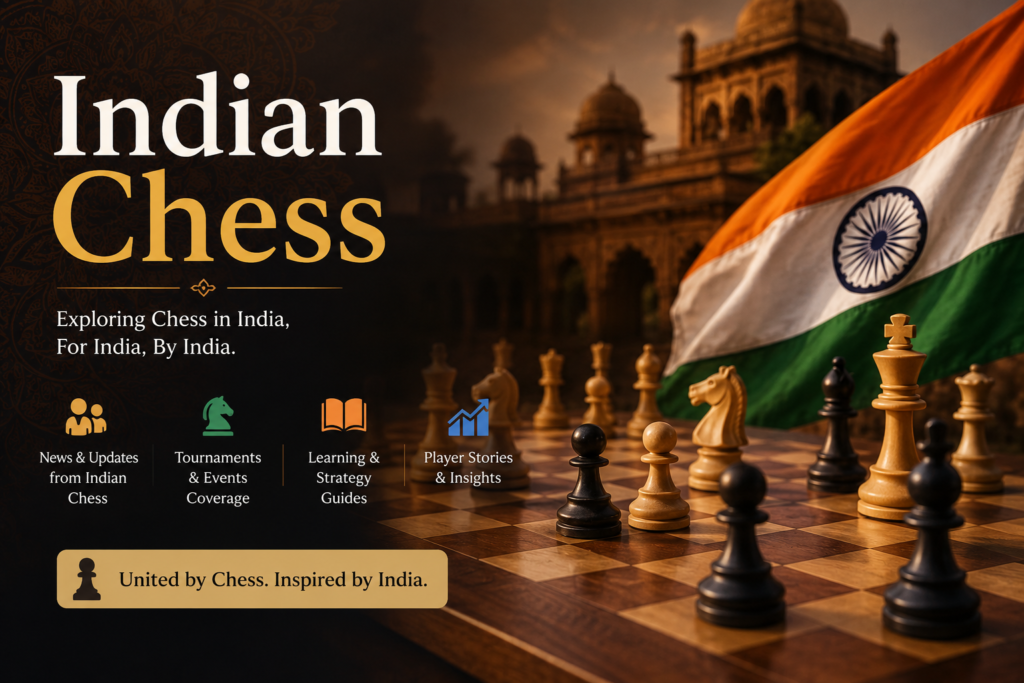
When people think about the origins of chess, the trail leads unmistakably back to one place — India. Indian chess is widely regarded as the ancestor of the most intellectually demanding board game ever created, and its story stretches back well over a thousand years. From royal courts to village squares, the game wove itself into the cultural and intellectual fabric of Indian civilization long before it ever reached Europe or the Middle East. For anyone curious about where this timeless game truly came from, the history of Indian chess is a journey worth taking.
The Ancient Origins of Indian Chess
Most historians and game scholars agree that the earliest known form of chess originated in India around the 6th century CE, during the Gupta Empire. The game was called Chaturanga, a Sanskrit word that translates roughly to “four divisions of the military.” Those four divisions — infantry, cavalry, elephants, and chariots — mapped directly onto the pieces used in the game.
Chaturanga was not merely a pastime. It was a strategic simulation of ancient Indian warfare, played on an eight-by-eight grid called an ashtāpada. The four military units each moved in distinct ways, mirroring their real-world counterparts on the battlefield. The elephant, for instance, was one of the most powerful units — a direct ancestor of what the Western world would eventually call the bishop.
What makes Indian chess particularly fascinating is how it captured the imagination of neighboring civilizations. When Persian traders and diplomats encountered the game, they adapted it into a version known as Shatranj, carrying it westward through the Persian Empire and, later, into the Arab world and Europe. By the time chess arrived in medieval Europe, it had already undergone centuries of transformation — but its DNA was unmistakably Indian.
Chaturanga: The Grandfather of Modern Chess
Understanding Chaturanga is essential to appreciating how deeply Indian chess influenced the modern game. The original Chaturanga had some key differences from chess as it is played today. It was sometimes played by four players rather than two, with each player controlling a different colored set of pieces. Dice were occasionally used to determine which piece could be moved on a given turn, adding an element of chance to what is now considered a purely strategic game.
The pieces in Chaturanga included:
- The Raja (King) — moved identically to the modern king
- The Mantri (Counselor) — a far weaker piece than today’s queen
- The Ratha (Chariot) — the forerunner of the modern rook
- The Gaja (Elephant) — ancestor of the bishop
- The Ashva (Horse) — unchanged as today’s knight
- The Padāti (Foot Soldier) — evolved into today’s pawn
Each of these pieces carried deep symbolism rooted in Indian military tradition and philosophy. The game was not just about winning — it reflected the Hindu and Buddhist worldviews of strategy, patience, and the interconnectedness of all actions.
Chess in Classical Indian Literature and Culture
Indian chess did not exist in isolation. It became a subject of poetry, literature, and philosophical discourse across centuries. References to chess appear in classical Sanskrit texts, including the Harshacharita (a 7th-century biography of Emperor Harsha) and various Puranic writings. These texts did not simply mention chess in passing — they described it as a sign of culture, intelligence, and refinement.
Chess boards and pieces have also been discovered at archaeological sites across the Indian subcontinent. Some of the most intricate early chess pieces ever found were carved from ivory and gemstones, suggesting that the game held significant prestige among royalty and the educated class. Merchants, scholars, and kings alike played Indian chess as a way of sharpening their minds and demonstrating their intellectual prowess.
The game’s cultural weight extended into the realm of education as well. Ancient Indian educators recognized chess as a tool for developing strategic thinking, foresight, and the ability to plan several moves ahead — qualities that were considered essential for leadership.
The Spread of Indian Chess Across the Globe
The journey of Indian chess from the subcontinent to the rest of the world is one of the most remarkable stories in the history of games. Sometime around the 6th or 7th century CE, the game traveled to Persia, where it was called Chatrang and later Shatranj. Persian sources, including the famous text Karnamak-i Ardeshir, reference the arrival of the game from India with a great deal of wonder and admiration.
From Persia, the game moved into the Arab Islamic world following the 7th-century conquest of Persia. Arab scholars and players embraced chess enthusiastically, writing some of the earliest dedicated chess strategy manuals in history. The Arabs refined the rules, introduced new piece movements, and elevated chess to the status of a science.
By the 9th and 10th centuries, chess had reached Europe through Moorish Spain and other trade routes. European players eventually transformed the Mantri into the far more powerful Queen and added the concept of en passant, among other changes. By the 15th century, chess in Europe had largely taken the form recognized today.
Throughout all of this evolution, the fingerprints of Indian chess remained present — in the structure of the board, in the fundamental rules of piece movement, and in the strategic philosophy that makes the game so endlessly rich.
Indian Chess in the Modern Era
Fast forward to the present day, and India’s relationship with chess has entered an extraordinary new chapter. India has become one of the most dominant nations in competitive international chess, producing a roster of Grandmasters that continues to grow year after year.
Viswanathan Anand, widely known as “Vishy,” stands as the most celebrated figure in modern Indian chess. Born in Chennai, Anand became the first Asian player to win the World Chess Championship undisputed title and held the World Chess Championship crown multiple times between 2000 and 2013. His playing style — marked by lightning-fast calculation and an almost supernatural intuition — made him a global icon for the sport.
Anand’s success opened floodgates for an entire generation of Indian chess talent. Players like Pentala Harikrishna, Vidit Gujrathi, R. Praggnanandhaa, and Dommaraju Gukesh have all risen to Grandmaster status and competed at the highest levels of world chess. India’s national chess team has become a formidable force at Chess Olympiads, consistently challenging the traditional powerhouses of Russia, China, and the United States.
The growth of chess education in India has also been remarkable. Schools across the country have integrated chess into their curricula, and chess academies — particularly in Tamil Nadu, Maharashtra, and Delhi — train young players from an early age. The All India Chess Federation (AICF) has played a central role in organizing tournaments, certifying coaches, and promoting the game at grassroots levels.
Regional Chess Traditions in India
One aspect of Indian chess that often goes unnoticed is the rich tapestry of regional chess traditions that have survived alongside the international standard. In parts of South India, older forms of the game with slightly different piece movements and board setups were played well into the 20th century. These regional variations offer a living link to Chaturanga and the pre-Shatranj era of Indian chess history.
Traditional chess artisans in cities like Varanasi, Agra, and Mysore have long crafted elaborate chess sets that reflect India’s artistic heritage. Hand-carved wooden pieces featuring Mughal court figures, Rajput warriors, and mythological characters from the Mahabharata and Ramayana are sold as both functional game sets and decorative collector’s items. These chess sets serve as a beautiful reminder that Indian chess has always been more than just a game — it is an expression of culture, identity, and creativity.
Why Indian Chess Matters Today
The significance of Indian chess in the 21st century extends well beyond sports and history. Researchers in cognitive science and education continue to study chess as a tool for improving memory, concentration, problem-solving skills, and even emotional resilience in young learners. India, with its deep chess heritage, has become a natural laboratory for such studies.
Globally, chess has experienced a massive resurgence in popularity, partly fueled by online platforms and the cultural phenomenon sparked by Netflix’s The Queen’s Gambit. Within India, this resurgence has been particularly intense. The country now boasts over 80 active Grandmasters, a number that is steadily climbing.
Given that the game originated in India, there is something profoundly poetic about the country reclaiming its place at the very summit of world chess. The story of Indian chess — from Chaturanga on ancient battlefields to grandmaster tournaments on digital screens — is a story about human ingenuity, cultural exchange, and the enduring power of a beautifully simple idea: two minds, one board, endless possibility.
Conclusion
Indian chess is far more than a chapter in the history of board games. It is the origin point of a global intellectual tradition that has shaped how human beings think about strategy, competition, and mental discipline for over fifteen centuries. From the ancient courts of the Gupta Empire to the world-class tournaments of today, India’s relationship with chess is one of the most enduring and meaningful in the history of human culture. As young Indian players continue to rise to the top of the global rankings, they are not just winning tournaments — they are carrying forward a legacy that began right there, on an eight-by-eight board, thousands of years ago.
Pingback: Hand Carved Chess Set: The Art, Craft, and Timeless Appeal of a Masterpiece Board Game [1] - Chess Next Move - Best next move calculator