
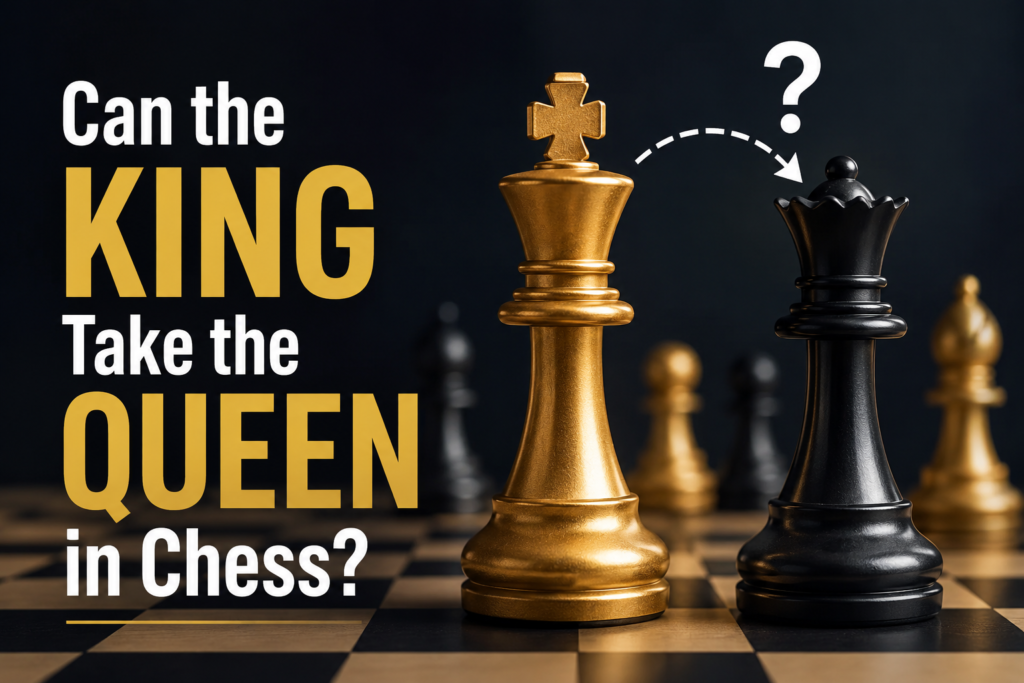
Chess is one of those timeless games that has fascinated minds for centuries. Whether someone is just picking up the pieces for the first time or has been playing for years, certain questions always seem to pop up — and one of the most common ones is: can the king take the queen in chess? It is a fair question, and the answer is a little more nuanced than a simple yes or no. Let us break it all down in a way that is easy to understand and genuinely useful for anyone looking to sharpen their chess knowledge.
Understanding the King’s Role on the Chessboard
Before diving into whether the king can capture the queen, it helps to understand what the king actually does on the board. The king is, without a doubt, the most important piece in the entire game. If a king gets cornered with no escape — a situation known as checkmate — the game is over. That is why protecting the king is always the top priority for any chess player.
However, the king is also one of the slowest-moving pieces. The King moves a single square in any direction: forward, backward, left, right, or diagonally.. This limited mobility makes the king feel fragile, but it also means players have to be very deliberate and thoughtful about when and where they move it.
Because of this, the king rarely ventures into the thick of battle, especially during the early and middle stages of a game. It typically stays tucked away behind a wall of pawns or has castled to the side of the board for extra safety. But every now and then, the king has to step up — and in certain situations, it can even take an opponent’s piece.
So, Can the King Actually Take the Queen?
Yes — the king can take the queen in chess, but only under a very specific condition: the queen must be unprotected (also called “undefended”).
Here is the key rule every chess player needs to keep in mind: a king can never move into a square that is under attack by an enemy piece. This means if the opposing queen occupies a square the king could typically reach, he can only capture her if the move doesn’t leave him in check. the king in check.
In practical terms, this means:
- If the queen is hanging — meaning no other enemy piece is defending it — the king can absolutely step in and take it.
- If the queen is backed up by another piece, say a rook or a bishop, the king cannot take it. Moving the king onto that square would put it in check, which is an illegal move in chess.
This rule is consistent and non-negotiable. A player cannot voluntarily move their king into danger under any circumstance. The game simply does not allow it.

When Does This Situation Actually Happen?
It might seem rare for a king to have a legitimate opportunity to capture a queen, but it actually happens more often than beginners might expect — especially in the .
The Endgame Scenario
As the board clears up and fewer pieces remain, the king becomes a more active and powerful force. During the endgame, both kings tend to come out of hiding and get involved in the action. If an opponent makes a careless move and leaves their queen without backup, the opposing king can swoop in and take it.
This is one of the reasons why endgame strategy emphasizes keeping pieces coordinated. A lone queen charging forward without support can sometimes end up trapped or — in a dramatic reversal — captured by the very king it was trying to chase down.
Tactical Tricks and Traps
There are also clever tactical setups where a player might deliberately “offer” their queen in a way that looks like a free capture, but actually sets up something devastating .Expert players occasionally sacrifice material to secure a tactical or positional edge, which may involve the king capturing a queen as part of the exchange.
Beginners are often surprised to learn that taking a queen does not always mean winning the game. Sometimes capturing the queen leads the king into a position where checkmate follows shortly after. That is why every single move needs to be evaluated carefully, even ones that look like obvious wins on the surface.
The Rules That Govern King Captures
To fully grasp when the king can take the queen, it is helpful to review the broader rules that govern how the king captures any piece:
Rule 1 – No Moving Into Check
As mentioned earlier, the king can never move to a square that is controlled by an enemy piece. This applies whether the target square is empty or occupied by an enemy piece. If capturing a piece would put the king in check, the move is illegal.
Rule 2 – One Square at a Time
The king captures just like it moves — one square in any direction. This limits which pieces the king can even reach at any given moment. Unlike a queen or rook that can sweep across the board in one move, the king has to be right next to a piece in order to capture it.
Rule 3 – The King Cannot Move Next to the Opposing King
Here is another important rule that sometimes gets overlooked: the two kings can never stand on adjacent squares. Each king controls the squares around it, so moving a king next to the other king would mean stepping into check — which is, again, an illegal move. This rule effectively creates an invisible barrier between the two kings throughout the game.
Why Would a Player Leave Their Queen Unprotected?
This is a great question, and the honest answer is — usually by mistake. Blunders happen at every level of chess, and hanging a queen is one of the most painful errors a player can make. One moment of inattention, one missed tactical pattern, and suddenly the most powerful piece on the board is gone.
Common reasons a queen ends up unprotected include:
- Overextension: The queen charges too deep into enemy territory without support.
- Distraction: A player is so focused on their own attack that they fail to notice a threat developing on the other side.
- Time pressure: In timed games, players are more likely to miss tactical details.
- Underestimating the opponent’s king: Especially in the endgame, players sometimes forget that the opposing king can be an active piece capable of attacking.
Learning to spot undefended pieces — both on one’s own side and the opponent’s — is one of the most fundamental skills in chess. It is a habit that separates improving players from beginners.
Practical Tips for Players
Understanding the rule is one thing, but being able to use it in a real game is another. Here are a few practical takeaways for chess players at any level:
Always Ask, “Is That Piece Protected?”
Before capturing any piece with the king — or any piece at all — it is worth pausing for a moment and asking whether the target is actually safe to take. Checking if the piece is defended can prevent costly mistakes.
Activate the King in the Endgame
One of the most common pieces of advice in endgame chess is to activate the king. As the board simplifies, the king transforms from a liability into a genuine weapon. Players who bring their king into active positions — where it can attack pawns, support their own passed pawns, and even threaten enemy pieces like the queen — often have a significant advantage.
Watch for King and Queen Proximity
If the king is within one square of the opponent’s queen and the queen has no defenders nearby, that is worth evaluating carefully. The king-takes-queen scenario is always on the table in those positions, and it can completely change the outcome of the game.
Study Classic Endgame Patterns
Many well-known endgame studies and puzzles feature scenarios where the king plays a starring role. Studying these patterns helps players recognize similar opportunities during actual games. A strong endgame understanding is often what separates average players from those who consistently win.
Common Misconceptions
There are a few myths and misconceptions that come up around this topic, and it is worth clearing them up:
Misconception 1: “The king is too weak to ever capture anything.” This is simply not true. While the king is not an aggressive attacker like the queen or rook, it is perfectly capable of capturing enemy pieces when it is safe to do so. In endgames, the king frequently captures pawns and sometimes even more valuable pieces.
Misconception 2: “If the king takes the queen, the game is automatically won.” Not necessarily. Capturing the queen is a massive material advantage, but the game is only over when checkmate is delivered. Players still need to convert that advantage into an actual win, which requires careful technique.
Misconception 3: “A protected queen can never be captured.” While it is almost always bad strategy to capture a protected queen with the king, there are extreme edge cases — like zugzwang situations or stalemate threats — where unusual moves become necessary. Chess is full of exceptions.
Final Thoughts
So, to wrap it all up — yes, the king can take the queen in chess, but only when the queen is undefended. It is one of those delightful moments in the game where the quiet, slow-moving king suddenly becomes the hero of the story. Understanding this rule not only deepens someone’s grasp of how the king works, but also opens up a whole new layer of tactical and strategic awareness.
Chess rewards players who stay observant, think carefully before every move, and never underestimate any piece on the board — including the king. Whether someone is playing a casual game with friends or working toward competitive improvement, keeping these fundamentals in mind can make a real difference in how the game unfolds.