
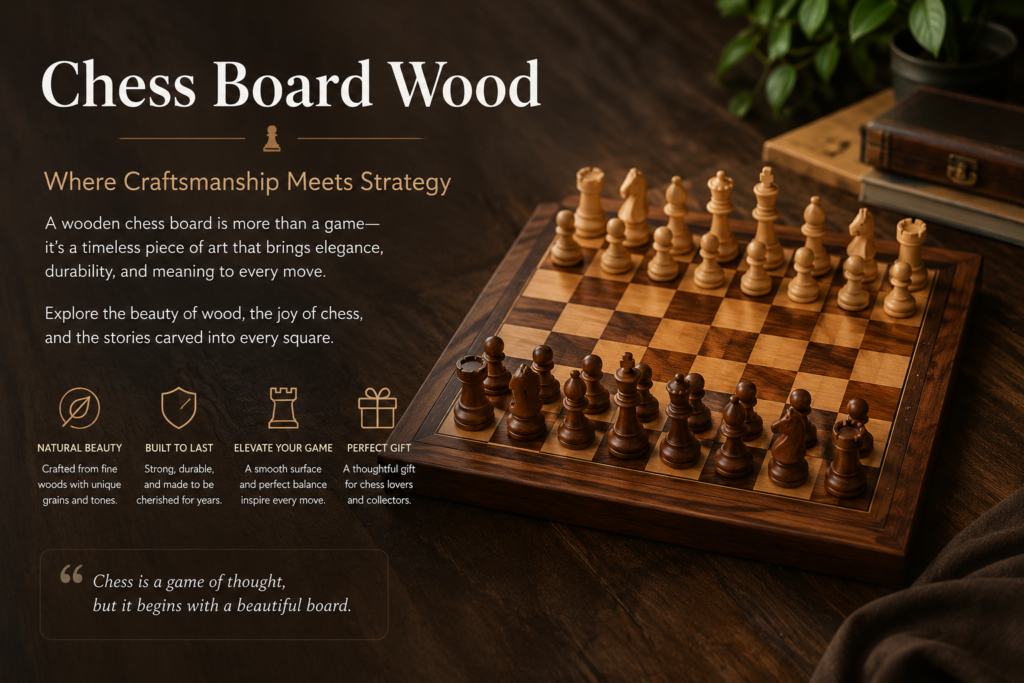
Vinyl is fine for a quick game in the park. Wood is for the game you remember.The weight of it, the grain pattern running across the surface, the way light catches a well-finished square, all of it adds up to an experience that feels genuinely different from playing on any other material. For chess enthusiasts who take their game seriously, or who simply appreciate quality craftsmanship, a wood chess board is often the centerpiece of their setup.
This guide covers everything worth knowing about chess board wood, from the most popular wood types and their characteristics to what separates a well-made board from a disappointing one.
Why Wood Remains the Preferred Material for Chess Board Wood
Chess boards have been made from dozens of materials over the centuries, including stone, marble, leather, metal, and various synthetic surfaces. Yet wood has remained the dominant choice for serious players and collectors alike, and the reasons are fairly straightforward.
Wood ages well. A quality wooden chess board, properly cared for, lasts decades and often improves in character over time as the finish deepens and the grain becomes more pronounced. Wood also has a natural warmth and texture that makes long playing sessions more comfortable visually and physically. Sliding a piece across a smooth, well-finished wooden surface is a noticeably more satisfying experience than doing the same on plastic.
There is also the craftsmanship angle. A handmade wooden chess board represents real skill and time investment, which many players value beyond the purely functional aspects of the game. Owning a beautiful wood chess board is, for many people, as much about appreciating the object itself as it is about playing on it.
The Most Popular Wood Types Used in Chess Boards
Not all wood is created equal when it comes to chess boards. Different species bring different colors, grain patterns, hardness levels, and price points. Understanding what sets them apart helps in choosing the right board for any given need or budget.
Maple
Maple is one of the most widely used woods in chess board construction, typically for the light-colored squares. It is a hard, dense wood with a fine, consistent grain that finishes beautifully. The natural color of maple ranges from creamy white to a light golden tone, which makes it an ideal contrast partner for darker woods. Maple is durable, resistant to scratching, and holds up well under regular use, which is why it appears in everything from affordable club boards to premium handcrafted sets.
Walnut
Walnut is the most common choice for the dark squares on a chess board, and it is easy to understand why. Its rich chocolate-brown color, often with subtle purple or grey undertones, creates a striking visual contrast against maple or other lighter woods. Walnut has a straight, open grain that gives it a clean, sophisticated appearance, and it is hard enough to resist denting and scratching under normal use. A maple and walnut chess board is arguably the most classic combination in the hobby, and countless boards have been made with this pairing over the years.
Rosewood
Rosewood is a premium wood that brings a deep reddish-brown color and an intricate, swirling grain pattern to chess boards. It is considerably denser and harder than walnut, which adds weight and a feeling of real substance to the board. Rosewood has a natural oil content that gives it a lustrous appearance even without heavy finishing. Boards made with rosewood tend to sit at the higher end of the price range, but the visual result is genuinely impressive. Indian rosewood, also called sheesham, is one of the most common varieties used in chess board production.
Ebony
Ebony is among the most luxurious wood chess board materials available. It is extremely dense, nearly black in color, and has a fine grain that polishes to an almost glass-like finish. Ebony chess boards are genuinely beautiful objects, with a depth and richness of color that no stain or dye can replicate. The trade-off is cost: genuine ebony is expensive, partly because the trees grow slowly and the wood is in limited supply. Many boards marketed as ebony use alternative dark woods that have been stained to approximate the look.
Sheesham (Indian Rosewood)
Sheesham deserves its own mention because it is so widely used in chess board production, particularly in boards coming from India, which is a major manufacturing hub for quality wooden chess sets. Sheesham has a warm, reddish-brown color with darker streaks running through the grain, giving each board a slightly unique character. It is dense, durable, and takes finishing well. Sheesham and maple is a very popular pairing for mid-range wooden chess boards, offering an attractive appearance at a more accessible price than exotic alternatives.
Teak
Teak is primarily known as a furniture and outdoor wood, but it appears in chess boards occasionally, particularly in regions where it is locally abundant. It has a golden-brown color, a pronounced grain, and a natural oil content that makes it highly resistant to moisture and warping. A teak chess board holds up particularly well in varied climate conditions, which makes it a practical choice for players in humid environments.
Wenge
Wenge is a striking dark wood with a near-black base color and fine, lighter-colored grain lines running through it. It creates a bold, dramatic look on a chess board and is hard enough to withstand regular use. Wenge is less commonly seen than walnut or rosewood in chess board production, but boards made with it tend to stand out visually and appeal to players who want something a little different from the standard dark and light wood combinations.
Construction Methods: Solid Wood vs. Veneered Boards
Beyond the species of wood chosen, the construction method of a wooden chess board significantly affects its quality, appearance, and longevity.
Solid Wood Boards
A solid wood chess board is made entirely from actual wood throughout its thickness. Each square is a piece of real wood, glued together to form the playing surface. Solid wood boards are more durable and more valuable than veneered alternatives. They can be refinished if the surface becomes scratched or worn over time, which extends their lifespan considerably. The grain patterns on solid wood boards are also more pronounced and varied, giving each board a unique character.
Veneered Boards
A veneered chess board has a thin layer of decorative wood applied over a substrate, typically MDF or plywood. The top surface looks like solid wood, but the board is not wood all the way through. Veneered boards are significantly cheaper to produce, which allows manufacturers to use visually appealing materials like ebony or rosewood veneers on boards that would otherwise be unaffordable at a solid wood price point. The trade-off is that veneered boards cannot be refinished once the surface is damaged, and the veneer can sometimes lift or delaminate over time if exposed to moisture or temperature changes.
For casual players and those on a tighter budget, a high-quality veneered board is a perfectly reasonable choice. For serious collectors and players who want a board that lasts a lifetime, solid wood is the better investment.
What to Look for When Buying a Wooden Chess Board
With so many options available, a few specific qualities are worth checking before committing to a purchase.
Square size matters. The standard square size for tournament play is 57mm, and most pieces are designed to work proportionally with squares in the 50mm to 60mm range. The king’s base diameter should ideally be around 75 to 80 percent of the square size. Before buying, it is worth confirming that the board squares are compatible with whatever pieces will be used on it.
Surface finish quality. A well-finished wooden chess board should have a smooth, consistent surface with no rough patches, uneven coloring, or bubbling in the lacquer. Running a hand across the surface in person, or examining close-up photos carefully when buying online, reveals a lot about the finish quality.
Flatness and stability. A wooden chess board that warps or rocks on a table is frustrating to play on. Quality boards are constructed to minimize warping, often using cross-grain lamination techniques or supporting backing materials. Boards made from a single wide plank are more susceptible to warping than those made from glued strips of smaller pieces.
Corner and edge construction. The edges and corners of the board take the most physical stress over time. Well-made boards have neatly finished edges, often with a slight bevel or rounding that prevents chipping and adds to the overall visual appeal.
Border and notation. Some wooden chess boards include algebraic notation along the edges (the letters a through h and numbers 1 through 8), which is useful for players who are studying or annotating games. Others have a plain border for a cleaner aesthetic. This comes down to personal preference, but it is worth knowing which style a board has before purchasing.
Caring for a Wooden Chess Board
A wooden chess board that is properly maintained stays beautiful for a very long time.
Keeping it away from direct sunlight slows the natural color change that affects most wood species over time. While some color deepening is normal and even desirable, prolonged UV exposure can cause uneven fading or bleaching.
Occasional treatment with a food-safe wood oil or a dedicated board conditioner keeps the surface from drying out, particularly in environments with low humidity. This is especially important for rosewood and sheesham boards, which have higher natural oil content but still benefit from occasional conditioning.
Storing the board flat, rather than standing it on its edge, reduces the risk of warping over time. If the board comes with a storage case or cloth cover, using it keeps dust and minor scratches at bay during periods when it is not in use.
Final Thoughts
A wooden chess board is one of those purchases that players rarely regret. The right board, made from quality wood and built with care, becomes a long-term companion to the game, something that improves with age and carries a quiet sense of quality that synthetic alternatives simply do not offer.
Whether the choice is a classic maple and walnut combination, a striking rosewood board, or something more exotic like ebony or wenge, there is a wooden chess board out there that suits every taste and budget. Taking the time to understand the options makes the decision a much easier and more satisfying one.